Happy International Mangroves Day!

‘Mangroves from the Water’ is a group multimedia art exhibition that would have been opening today in Geelong, Australia, to celebrate the Mangroves Day 26 July, https://en.unesco.org/commemorations/mangroveday
Due to the Corona virus pandemic the exhibition has been postponed to 26 July, 2021.
Intl Mangrove Day_MangrovesFromtheWater20
In celebration of the upcoming Mangroves Day, ‘Mangroves from the Water’ committed International artist Stephanie Neville has designed our poster.
In collaboration with the Mangroves Fosters Community, Ocean Tree Studio (Maya Greven) in Florida who have designed a poster for the International Day for the Conservation of the Mangrove Ecosystem.
Mangroves Foster Community


Mangroves from the Water artists and quest speakers are  artists are:

Alexis Gambis, Nicola Cerini, Enrico Santucci,  Deb Taylor, Richard Collopy, Jacqui Dreessens, Geraldine Chansard, Helen and Peter Martin, Malcolm Gardiner, scientist Oskar Serrano and Zahidah Zeytoun Millie


We are all excited to share this special day with fellow international eco-warriors passionate about the preservation of the mangroves!

Zahidah’s interview on The Sustainable Hour, 22 July

In the run up to the International day for the Conservation of the Mangrove Ecosystem (26 July), please tune in on Wednesday, 22 July to The Sustainable Hour, at 11 am, to listen to an interview with our curator Zahidah Zeytoun Millie!

Details: The Pulse 94.7 FM, Geelong, Victoria, community radio, at  11 a.m.

You can find the podcast here!

The Sustainable Hour:

By Anthony Gleeson, Jackie Matthews, Colin Mockett & Mik Aidt: The Sustainable Hour is a weekly podcast from Geelong, Australia, out at 11am on Wednesdays – for a green, clean, sustainable Geelong. We talk about how we make our houses and apartments, gardens and streets, our city, neighbourhood or village greener, cleaner, more beautiful, nicer to live in, healthier, more economical, connected and resilient while having fun with it too. Available in iTunes and Stitcher. More on http://www.podcast.climatesafety.info

Schedule of events

Here is the schedule of talks, events and performances during our exhibition:

Mangroves from the water

Gordon Gallery, Deakin University, Geelong, Australia

26 July – 15 August

The exhibition will provide viewers with a range of media to appeal to as wide an audience as possible. The artists also hope to see discussions occurring throughout the exhibition in a series of colloquia.

The artists are:

Alexis Gambis, Nicola Cerini, Enrico Santucci, Deb Taylor, Richard Collopy, Jacqui Dreessens, Stephanie Neville, Geraldine Chansard, Peter & Helen Martin, and Zahidah Zeytoun Millie.

 The exhibition event will open on International Mangroves Day, 26 July, and end on 15 August 2020 during National Science Week (15-23 August).   Workshops on weaving, printing and painting will run during the multimedia exhibition and guest speakers will present related talks on mangroves and the Barwon region.

Guest speakers:

Date/Time Guest Speaker Location Title
15 Aug,

1000-1100

Oskar Serrano Deakin University Coastal wetlands as weapons for climate change mitigation and time capsules of the human past
15 Aug, 1100-1200 Peter Martin Deakin University For the Beauty of the Earth


Workshops schedule:                                                                 

Date/Time Presenter Workshop Location Materials
31 Jul,

1000-1200

14 Aug,

1000-1200

7 Aug,

1000-1200

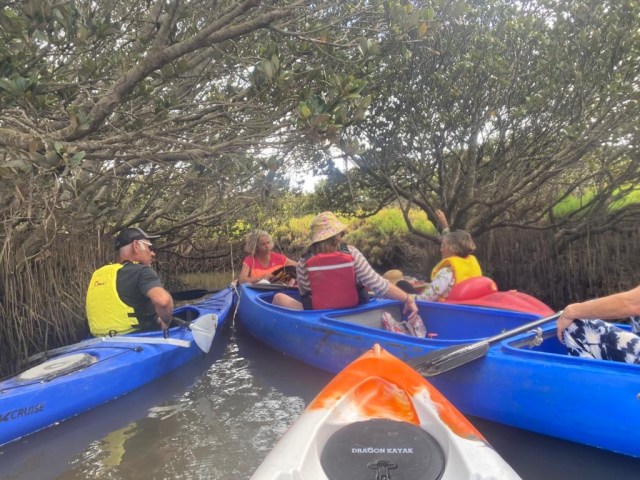
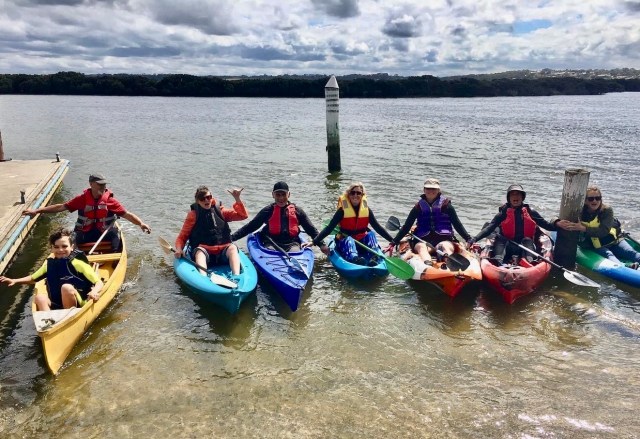
Zahidah Zeytoun Millie Kayaking/water colour sketching. Barwon River, Barwon Heads

Hovells Creek

Water colours, sketch book, kayak (self provided)
1 Aug, 1000-1600 Helen Martin Eco printing Point Lonsdale
2 Aug,

1000-1200


Deb Taylor 2 hour collage

and paint

workshop

Project Space Gallery
26 Jul,

1400-1500


8 Aug, 1400-6500


 22 Aug,

1400-6500

Jacqueline Dreessens Environmental Dance  Interpretation The Project Space Gallery

Hovells Creek

School

theatre TBC

15 Aug,

0930-1230

Nicola Cerini Interpreting the mangroves: printing on plywood The School of Lost Arts

 Live Performances

Date/Time Presenter Performance Location
Live music Project Space Gallery
26 July

1400-1500

Jacqueline Dreessens Environmental Dance  Interpretation The Project Space Gallery

How do mangroves help us?

Information researched from the Australian Marine Environment Protection Association

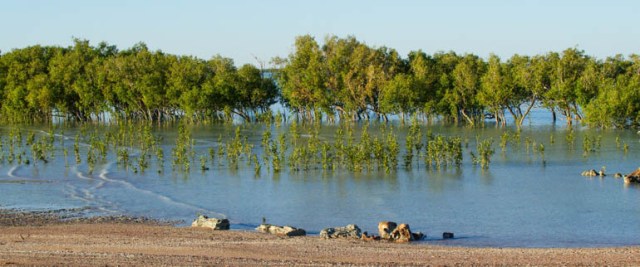
Did you know that both the habitat and the trees that live in the sea are called mangroves.

Toby_Smith_Mangroves_Final

Mangroves live in the area where the tide moves in and out along the coasts, estuaries and rivers. This area is called the intertidal zone. The tides move in and out twice each day. Depending on the position of the moon and sun along with seasons and storms affects the time and height of the tides.

Did you know that Australia has about 20% of the world’s mangrove forests.

83802201_2966841826693920_8062624337330438144_o

These forests are far more important to us than we realise:

  • Mangroves are fish nurseries

Big fish eat little fish. When fish eggs hatch the tiny fish are easy prey for larger fish. Many newly hatched fish get protection by living among mangroves. These tiny fish can feed in the warm shallow water. They are small enough to avoid being eaten by birds. Large fish won’t swim in very shallow water because the many fish eating birds will quickly catch them as they are large targets. Mangroves are a very rich source of food. The mud is full of nutrients where microscopic bacteria, algae and small creatures thrive. It is packed with life for tiny fish to feed on.


Did you know that about two thirds of the marine fish eaten by Australian’s spent part of their life in mangroves. Without mangroves there would be fewer fish to catch and eat.  


09_fish_nursery_

  • Mangroves reduces storm damage

Mangroves live in the shallow intertidal zone and are most common around mudflats and protected coasts, estuaries and rivers. All coasts will be affected by storms and cyclones in tropical zones. During storms and cyclones, seawater can rise even higher than the tides and there are powerful waves. The sea can surge and cover low lying land. When powerful waves strike a mangrove, the mangroves absorb the energy from the waves and break them up. A dense forest of mangroves will stop the waves from reaching land.

Did you know that mangroves reduce the surge of seawater during storms and cyclones. In these conditions, coasts with mangroves will have less flooding from the sea.   


  • Mangroves are a carbon sink

A carbon sink is something that stores carbon in the environment.  It stops the carbon from becoming carbon dioxide gas and escaping into the atmosphere. Carbon dioxide in the atmosphere is a greenhouse gas leading to higher temperatures. Mangroves usually grow on mudflats and help to build up the mud. Leaves and other dead material trapped in the mud decompose very slowly or not at all.


Did you know that in a mangrove, carbon is stored in the wood and roots of the trees and also the millions of dead leaves in the mud. There is between two and four times more carbon stored in an area of a mangrove forest compared with a rainforest. 

72315757_2715476391830466_9108110262979788800_o


  • Mangroves clean storm water

Nearly all the pollution in the sea has come from the land. When it rains litter, chemicals, oil, dirt, leaves and soil can be washed into the sea. When the rain is very heavy the sea around the mouths of rivers becomes highly polluted. Even soil washed into the sea can affect coral reefs because these reefs need perfectly clear water. Mangrove can trap litter preventing it from being eaten by turtles and whales. Much of the dirt, soil and oil will be trapped in the mud. By slowing the movement of water out to sea, some of the chemicals such as fertiliser will have a chance to be used by bacteria or broken down before they reach sensitive places such as coral reefs. However ,too much fertiliser affects the health of mangroves.  

Did you know mangroves act as a filter, helping prevent human waste entering the oceans.

4Hand through the water, 2015,  Ras al Khaimah
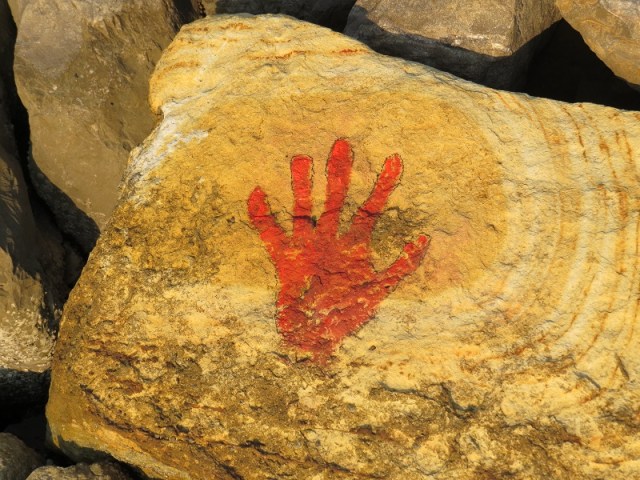
Geraldine Chansard, Red Hand, site-specific work (2015-2016). Let’s all STOP and think about the prints we leave behind for our future generations and work together, hand in hand, to protect our natural environment such as the important mangroves


Sourced from: Australian Marine Environment Protection Association, 22 March 2020, at: https://www.ausmepa.org.au/educators/middle-year/mangroves/mangroves-help-us/

The mangrove animal life

Text and images sourced from the Australian Marine Environment Protection Association

Mangroves are the supermarkets of the sea. The fertile mud is the original source of most of the mangrove’s food.  The fertility of the mud comes from the falling mangrove leaves.

Some animals live in the mangrove canopy and never step on the water or mud. This includes small birds, bats and most of the insects and spiders. For all the other mangroves animals they will be adapted for high tide feeding or low tide feeding. At high tide the fish move in and many of the small animals will be hiding from the fish. At low tide nearly all the fish move out and many animals come out of the mud to feed, but they need to watch out for birds. 

Crabs and shrimp

05_mangrove_animals

At low tide hundreds of mud borrows cover the exposed mud. If you wait quietly you will see small crabs scavenging for small pieces of dead plants and animals. There are dozens of species of crabs of all shapes and sizes. Fiddler crabs feed near their burrow. The male fiddler crab uses his large colourful claw to attract females. Mud shrimps also build burrows. Their burrows have a chimney. Prawns are strong swimmers. Young prawns will feed around mangroves. They feed at high tide. The millions of crabs and shrimps living in mangroves are an important source of food for fish and birds.

Shellfish

05_shellfish

Mud whelks are a type of snail with a long thick spiral shells. They eat plants and dead material that have fallen onto the mud. They can be seen crawling along the mud and will climb up the trunks of mangroves. Whelks were eaten by Aboriginals and the empty shells can be used by hermit crabs. Many other types of snail live in mangroves.

Some shellfish have two shells hinged on one side. The shells protect the soft body inside. These are called bivalves. These bivalve shellfish pump water into the shells so their gills can get oxygen and the filters inside gather food from the water. They hide below the mud or attach themselves to solid objects. . Birds with long beaks probe the mud to find them. When they die their empty shells are washed up

Mudskipper

05_mudskipper

Mudskippers are fish that use their fins to walk and skip on the mud at low tide. They breathe through their skin and the surface of their mouth when out of the water but they must remain damp. They store water in their large gill chambers on their neck. They will fight other mudskippers over their territory. When the tide comes in, they find protection from other fish by living in a burrow in the soft mud. Their burrow has a chimney built on top and they create an air pocket in the chamber below. The eyes on the top of their head allow them to swim with their eyes above the surface so they see predators from all directions. 

Insects and spiders
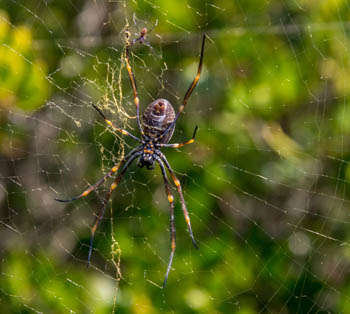
05_spider

The easiest to find insects in mangroves are the butterflies visiting the flowers for their nectar. While drinking the nectar, they are covered in pollen and help to transport the pollen to other flowers. At certain times of the year, mosquitoes and biting midges can make a visit to some mangroves unpleasant. Some species of ants, termites, wasps, moths, bugs and flies also make the mangroves their home.

Where there are insects, there are hungry spiders waiting to feed on them. Orb weavers spin their large webs between branches. Huntsman spiders hide under bark when they are not hunting. Leaf curing spiders make their home by using their silk to roll up a leaf where they can hide inside.

Birds

05_birds

Birds that hunt for insects and spiders or find food in the flowers  can be active all day long. Some of the birds like the mangrove whistler prefer living in mangroves, but many common birds like robins and honeyeaters will also feed in mangroves.

When the tide is out many wading and other wetland birds have a feast on crabs, marine worms, shellfish and any fish that have been left stranded. Herons and egrets are grabbing large items of food from shallow water or the muddy surface. Ibis and smaller wading birds can also probe the mud for the life hiding below. Many of the wading birds migrate to the northern hemisphere to breed.

Crocodiles
05_croc

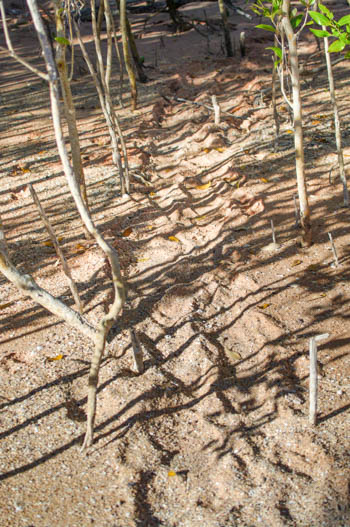
Saltwater crocodiles are often found at both low and high tides in mangrove swamps. They will find an open dry area where they can warm themselves in the sun. They will effortlessly swim around the mangrove hunting at high tide. At low tide they can only crawl leaving behind their large trail. They will feed on fish and large crabs. They will quickly clean up any dead animals.

Australia has two species of crocodile. The large saltwater crocodile lives in both salt and freshwater and are dangerous to humans. The freshwater crocodile lives in rivers and eats fish and are not normally a danger. The only thing people can do to protect themselves from saltwater crocodiles is to never swim in their habitat.


Please visit the AUSMEPA website for more information:

https://www.ausmepa.org.au/educators/middle-year/mangroves/mangrove-animals/

Did you know…?

Did you know…. these interesting facts about mangroves?

Two thirds of the fish we eat spend part of their life in mangroves.

Mangroves are trees or shrubs that live in seawater. They occur in the area between high and low tide along the coast, estuaries and up rivers.

Only two counties, Indonesia and Brazil have more mangroves than Australia. 

Australian mangroves cover nearly 12,000 square kilometres. 

Mangroves cover 18% of the Australian coastline.

Mangroves help protect the land from the sea during cyclones and storms.

Mangrove habitats store more carbon than rainforests. Much of the carbon is in the mud.


mangrove_3

Sourced from: Australian Marine Environment Protection Association, 21 March 2020, at: https://www.ausmepa.org.au/educators/middle-year/mangroves/mangrove-amazing-facts/

Appreciating nature’s beauty – Helen Martin

During this universally uncertain period, it helps to take time for reflection and appreciation.

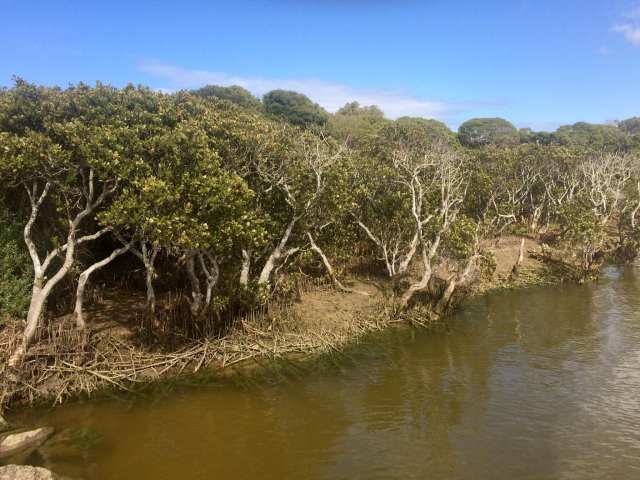
Being in isolation doesn’t mean one can’t still enjoy nature’s beauty. Helen Martin sent us these pictures from her visit to Warneet, Victoria, taken at the top of the bay where the Rutherford Creek flows into Western Port. (Photo taken by Helen Martin, with IPad).

thumbnailthumbnail2thumbnail3