Text and images sourced from the Australian Marine Environment Protection Association
Mangroves are the supermarkets of the sea. The fertile mud is the original source of most of the mangrove’s food. The fertility of the mud comes from the falling mangrove leaves.
Some animals live in the mangrove canopy and never step on the water or mud. This includes small birds, bats and most of the insects and spiders. For all the other mangroves animals they will be adapted for high tide feeding or low tide feeding. At high tide the fish move in and many of the small animals will be hiding from the fish. At low tide nearly all the fish move out and many animals come out of the mud to feed, but they need to watch out for birds.
Crabs and shrimp

At low tide hundreds of mud borrows cover the exposed mud. If you wait quietly you will see small crabs scavenging for small pieces of dead plants and animals. There are dozens of species of crabs of all shapes and sizes. Fiddler crabs feed near their burrow. The male fiddler crab uses his large colourful claw to attract females. Mud shrimps also build burrows. Their burrows have a chimney. Prawns are strong swimmers. Young prawns will feed around mangroves. They feed at high tide. The millions of crabs and shrimps living in mangroves are an important source of food for fish and birds.
Shellfish

Mud whelks are a type of snail with a long thick spiral shells. They eat plants and dead material that have fallen onto the mud. They can be seen crawling along the mud and will climb up the trunks of mangroves. Whelks were eaten by Aboriginals and the empty shells can be used by hermit crabs. Many other types of snail live in mangroves.
Some shellfish have two shells hinged on one side. The shells protect the soft body inside. These are called bivalves. These bivalve shellfish pump water into the shells so their gills can get oxygen and the filters inside gather food from the water. They hide below the mud or attach themselves to solid objects. . Birds with long beaks probe the mud to find them. When they die their empty shells are washed up
Mudskipper

Mudskippers are fish that use their fins to walk and skip on the mud at low tide. They breathe through their skin and the surface of their mouth when out of the water but they must remain damp. They store water in their large gill chambers on their neck. They will fight other mudskippers over their territory. When the tide comes in, they find protection from other fish by living in a burrow in the soft mud. Their burrow has a chimney built on top and they create an air pocket in the chamber below. The eyes on the top of their head allow them to swim with their eyes above the surface so they see predators from all directions.
Insects and spiders
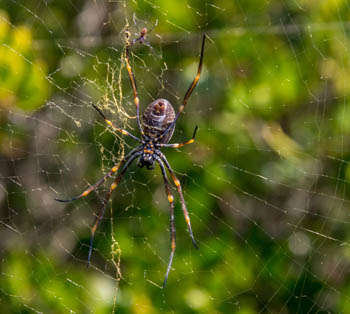
The easiest to find insects in mangroves are the butterflies visiting the flowers for their nectar. While drinking the nectar, they are covered in pollen and help to transport the pollen to other flowers. At certain times of the year, mosquitoes and biting midges can make a visit to some mangroves unpleasant. Some species of ants, termites, wasps, moths, bugs and flies also make the mangroves their home.
Where there are insects, there are hungry spiders waiting to feed on them. Orb weavers spin their large webs between branches. Huntsman spiders hide under bark when they are not hunting. Leaf curing spiders make their home by using their silk to roll up a leaf where they can hide inside.
Birds

Birds that hunt for insects and spiders or find food in the flowers can be active all day long. Some of the birds like the mangrove whistler prefer living in mangroves, but many common birds like robins and honeyeaters will also feed in mangroves.
When the tide is out many wading and other wetland birds have a feast on crabs, marine worms, shellfish and any fish that have been left stranded. Herons and egrets are grabbing large items of food from shallow water or the muddy surface. Ibis and smaller wading birds can also probe the mud for the life hiding below. Many of the wading birds migrate to the northern hemisphere to breed.
Crocodiles
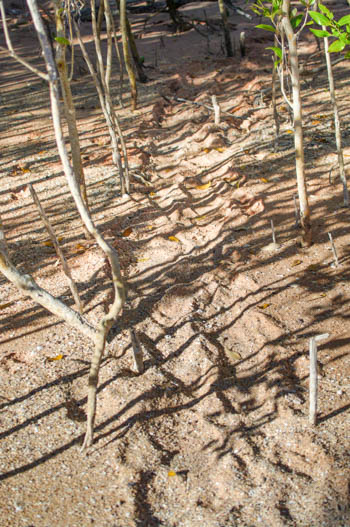
Saltwater crocodiles are often found at both low and high tides in mangrove swamps. They will find an open dry area where they can warm themselves in the sun. They will effortlessly swim around the mangrove hunting at high tide. At low tide they can only crawl leaving behind their large trail. They will feed on fish and large crabs. They will quickly clean up any dead animals.
Australia has two species of crocodile. The large saltwater crocodile lives in both salt and freshwater and are dangerous to humans. The freshwater crocodile lives in rivers and eats fish and are not normally a danger. The only thing people can do to protect themselves from saltwater crocodiles is to never swim in their habitat.
Please visit the AUSMEPA website for more information:
https://www.ausmepa.org.au/educators/middle-year/mangroves/mangrove-animals/